The Inside Line
Where Did All the Historic Race Cars Go?
Are they hidden away? Locked in private collections? Or have they simply been put away and forgotten?
It's a question I ask myself often. Ironically, while preparing for law school, I endured more history classes than I care to remember. I disliked history almost as much as I disliked Latin. Yet, fifty years later, history has become my life's passion. Today, I spend nearly every waking hour researching, preserving, and sharing automotive history—especially the history of the racing automobile. My mission is to tell the stories behind these remarkable machines and the extraordinary people who designed them, built them, raced them, and cherished them.
That story began long before modern historic racing.
Our Hollywood Sport Cars headquarters occupies a building originally constructed in the late 1910s as a Franklin automobile dealership. Every day when I walked through those doors, I was reminded that history surrounds us. Years ago, while skiing in the San Gabriel Mountains, I often thought about Mount Wilson. The first automobile to reach its summit was a Franklin. Today, that very car is owned by one of our HMSA members. History has an amazing way of coming full circle.
Pause for a moment and picture Southern California a century ago.
There were race tracks in Beverly Hills. Race tracks in Santa Monica. Dirt ovals, road courses, and magnificent wooden board tracks scattered throughout the region. Southern California wasn't merely part of American motorsports—it became its epicenter. Every morning on my drive to Hollywood Sport Cars, I passed the original home of Frank Kurtis, where some of the most influential race cars in American history were conceived and built. The streets of Southern California were filled with enthusiasts transforming ordinary automobiles into extraordinary racing machines.
If you start a list, beginning with the letter "A" and work your way through the alphabet. Alfas. Allards, Devins, OSCAs, Siatas. Don’t forget the purpose-built race cars, from ‘50s “home built specials” ingenious homebuilt specials (who could ever forget the legendary Ol' Yeller), to Formula Juniors, front and rear-engine sports racers, each has its own story. Each helped write the history of our sport, we miss them all.
One of my favorite memories involves the MGB. Our friends in England weren't exactly thrilled when the sixth MGB ever built was converted into a race car in Hollywood. They were even less pleased when that very car became the first MGB in the world to win a race—in its very first competition.
That's the spirit that built American road racing.
I could spend hours reminiscing about the remarkable cars that competed across North America and the incredible machines conceived, engineered or were transformed right here in Southern California. Eventually, I return to the same question.
Where are they today?
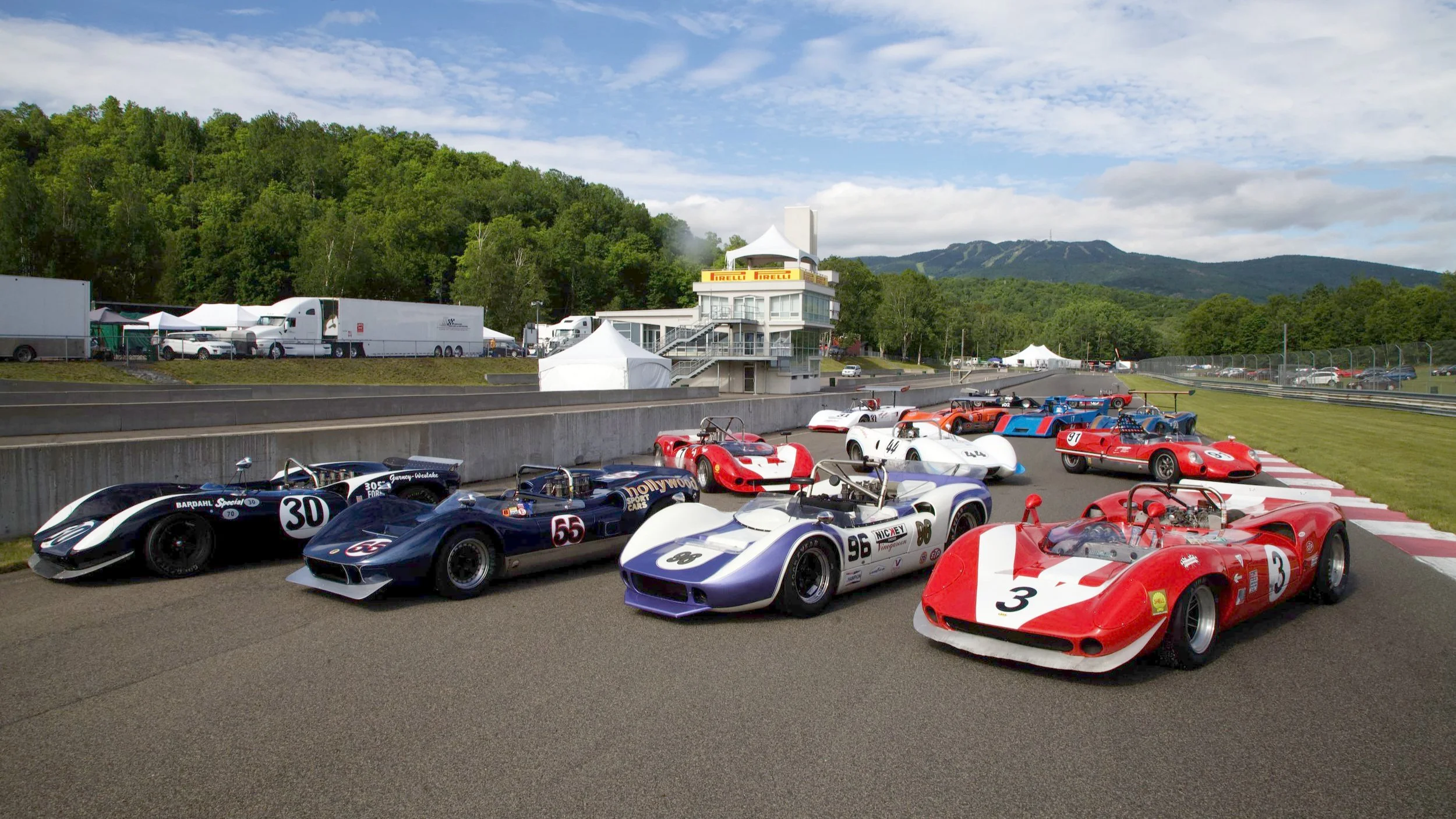
These were the cars that inspired generations of enthusiasts. They became the foundation upon which the Monterey Historic Automobile Races were built. If you wanted to see extraordinary race cars that couldn’t be found anywhere else on earth, you went to Monterey. Walking through that paddock was magical. Every transporter revealed another masterpiece. Cars you had only read about. Cars you never imagined seeing in person. Cars that represented the very best of motorsport history.
By today's standards many weren't especially fast, but my goodness... were they were beautiful. Today, I often hear people explain these cars absence by saying the owners have "timed out." I don't accept that. Others say the cars have become too valuable to race. I don't accept that either.
Years ago I used to joke that the more valuable a race car became, the easier it may be race it. Today that statement is closer to reality than ever before. Modern technology allows cars to be digitally scanned. Virtually every component of a historic race car can be reproduced with astonishing precision. High school students are manufacturing parts today using technologies that didn't exist a generation ago. If we have the ability to preserve these automobiles physically, surely we have the ability— and the responsibility—to preserve their purpose.
Not every owner can still drive. I understand that.
But nearly every owner has a son, daughter, grandchild, niece, nephew, or trusted friend who would cherish the opportunity to drive a historic car. What greater satisfaction could there be than watching someone you love take the wheel of the automobile that has given you so much joy? Historic race cars were never meant to spend their lives beneath covers. They were built to move, to roar and to breathe. Museums play a vital role in preserving the history and heritage of these cars. I admire every one of the museums. But museums tell only part of the story.
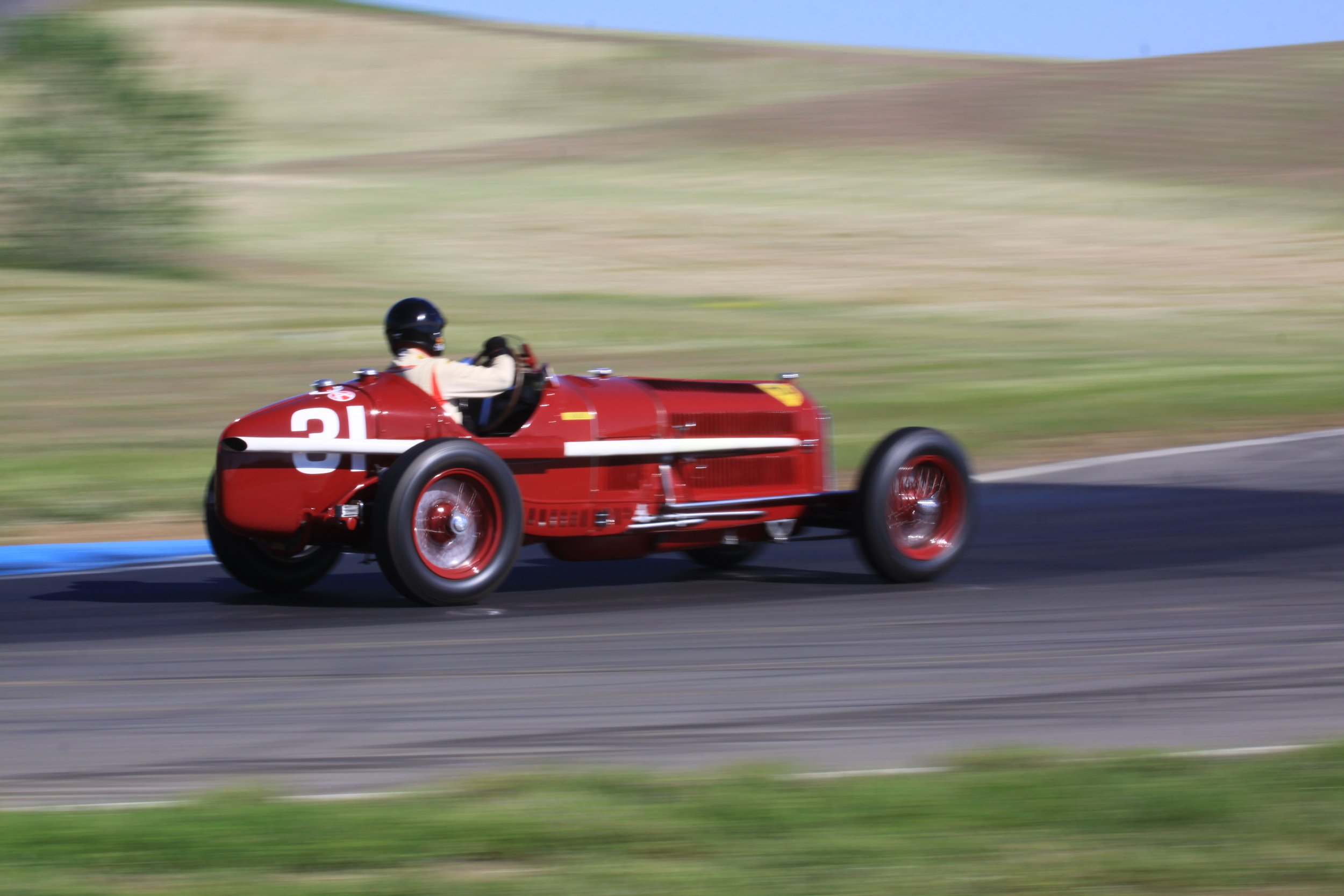
I don't simply want to see these cars, I want to hear them. I want to hear the unmistakable scream of a Ferrari V12 echoing across a race circuit. I want to hear the thunder of an American V8 the distinctive voice of a Siata V8, the unforgettable sound of a BRM V8 Formula One engine, a Maserati Grand Prix car, or the glorious song of a Lancia D50. I want to smell the Castrol oil. I want to breathe the racing fuel, (my doctor would love that one!!). I want to watch an early Alfa Romeo glisten in the morning sunlight as it rolls onto the circuit.
That is when history truly comes alive.
Baseball has its famous saying: "If you build it, they will come." I believe historic racing deserves its own version of that expression: "If we create an event built specifically for these great cars—an event founded on authenticity, respect, and the right philosophy—they will come."
I truly believe they will. And I sincerely hope you'll help prove it. That is exactly what we're trying to create this November at Apex Motor Club in Arizona. An event dedicated to the remarkable automobiles that built our sport. An event where owners don't have to worry about fitting into modern categories or balancing entertainment against history. An event where the automobiles themselves are the stars. If you no longer feel comfortable driving your treasured race car, invite someone into the sport who can. Let your children, your grandchildren, or another qualified driver experience what made these machines so extraordinary. Share your car, share its history and share its sound. Perhaps most importantly...Share its soul.
These automobiles don't truly belong to us. We are only their caretakers. Our privilege—and our responsibility—is to preserve them, enjoy them, and pass them to the next generation in motion, not in storage. Some of my greatest memories in historic racing weren't made standing on a podium. They were made sitting beside a race car with friends, eating a simple bologna sandwich, talking about racing, automobiles, and life. Those are the moments that matter. Those are the memories worth preserving.
So this November, I hope you'll join us in Arizona. Bring your race car. Bring your family. Bring your memories and stories. Together, let's make sure these magnificent machines are once again seen, heard, admired—and most importantly—driven.
Because history was never meant to sit quietly under a car cover.
Sincerely,
Cris